Breaking News: Pakistan Cuts Petrol Prices by Over Rs10 as New Year 2026 Begins
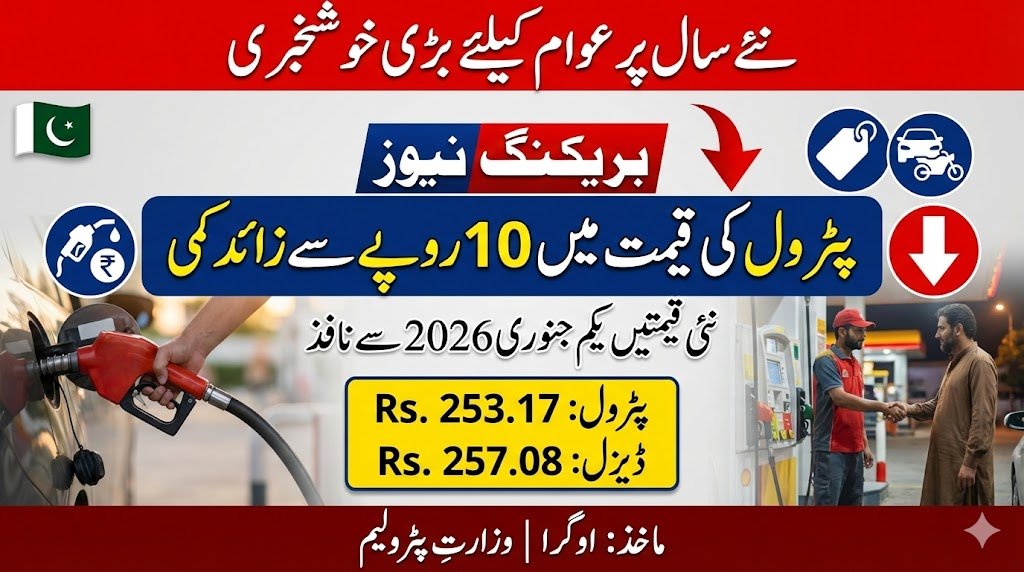
Pakistan has started the New Year 2026 with welcome relief for the public as the federal government announced a significant reduction in petrol and diesel prices. The price cut comes at a time when inflation and living costs remain a major concern for citizens across the country. According to the official notification, the new fuel prices will be effective from January 1 to January 15, 2026. This decision was taken after reviewing recommendations from the Oil and Gas Regulatory Authority (Ogra) and global oil market trends. The reduction is expected to provide temporary financial relief to households, transporters, and businesses that depend heavily on fuel for daily operations.
Fuel Price Comparison for January 2026
| Fuel Type | Old Price (Rs/Litre) | New Price (Rs/Litre) | Reduction |
|---|---|---|---|
| Petrol | 263.45 | 253.17 | Rs10.28 |
| High-Speed Diesel | 265.65 | 257.08 | Rs8.57 |
| Price Review Period | Jan 1–15, 2026 | Applicable Nationwide | Fortnightly |

Petrol Price Reduced to Rs253.17 per Litre
The government has reduced the price of petrol by Rs10.28 per litre, setting the new rate at Rs253.17 per litre. This price will remain in effect until January 15, 2026, after which a new review will be conducted. Petrol is widely used by private vehicles, motorcycles, and small transport services, so this reduction is expected to benefit a large portion of the population. For middle- and lower-income families, even a small reduction in fuel prices can help manage monthly expenses. Analysts believe that the cut reflects a slight easing in international oil prices and adjustments in import costs, which allowed the government to pass on relief to consumers.

Diesel Prices Also See a Noticeable Cut
Along with petrol, the price of high-speed diesel has also been reduced by Rs8.57 per litre, bringing the new price to Rs257.08 per litre. Diesel is mainly used in heavy transport, agriculture machinery, buses, and power generation, which means the impact of this cut could extend to goods transportation and food supply chains. Lower diesel prices can help reduce transportation costs for goods across the country, which may later reflect in stable or slightly reduced prices of essential items. In the previous price review, diesel prices were already reduced by Rs14 per litre, showing a continued trend of adjustment by the government.

Role of Ogra and the Petroleum Division
The Petroleum Division confirmed that the revised prices were announced based on recommendations provided by Ogra. Ogra regularly reviews international oil prices, exchange rate movements, and government taxes before suggesting changes. After receiving Ogra’s summary, the federal government makes the final decision. This system is designed to ensure transparency and consistency in fuel pricing. Officials stated that the latest reduction reflects careful consideration of global oil trends and domestic economic conditions. The government aims to balance public relief with revenue requirements, especially as fuel taxes remain an important source of income.
Impact on Inflation and Daily Life
Fuel prices directly affect inflation and the cost of living in Pakistan. A reduction in petrol and diesel prices can help control transport costs, which play a major role in determining prices of food, goods, and services. Economic experts believe that this price cut may support the government’s efforts to keep inflation under control in early 2026. However, they also caution that fuel prices are reviewed every fifteen days, and future changes will depend on international oil markets and currency conditions. For now, consumers are expected to experience some relief, especially commuters and transport workers.
Conclusion
The reduction in petrol and diesel prices at the start of New Year 2026 has brought short-term relief to the people of Pakistan. With petrol now priced at Rs253.17 per litre and diesel at Rs257.08 per litre, consumers can expect some easing in transportation and daily expenses. While this move reflects favorable global oil trends and Ogra’s recommendations, its long-term impact will depend on future price reviews. For now, the government’s decision has been welcomed by the public as a positive step toward economic relief during challenging times.
Latest Updates
 Bigger News: BISP 8171 CNIC Check Online 2026 – Eligibility, Payment Status & How to Check
 Good News: How to Apply for Green Tractor Scheme Phase 3? New Registration Portal 2026
 Punjab Schools Winter Vacations Update 2026 – Exact Dates & Reopening Schedule
 Gold Rate Today – Latest Gold Prices on 11 February 2026
 CM Punjab Bike Scheme 2026 Phase 2 Online Registration and Monthly Installment Plan
 NADRA Smart ID Card 2026 – New Fees and Fast-Track Delivery